STD testing is screening a blood, urine or swab sample for sexually transmitted infections — most commonly HIV, syphilis, chlamydia, gonorrhea, hepatitis B, hepatitis C, herpes and HPV. Blood samples detect the body's response to blood-borne infections; urine and swab samples are run through PCR, which detects the genetic material of the organism itself. The reason testing exists at all is that most of these infections cause no symptoms in their early stage, so screening is the only way to know your status.
In this guide:
1. What STD Testing Actually Is
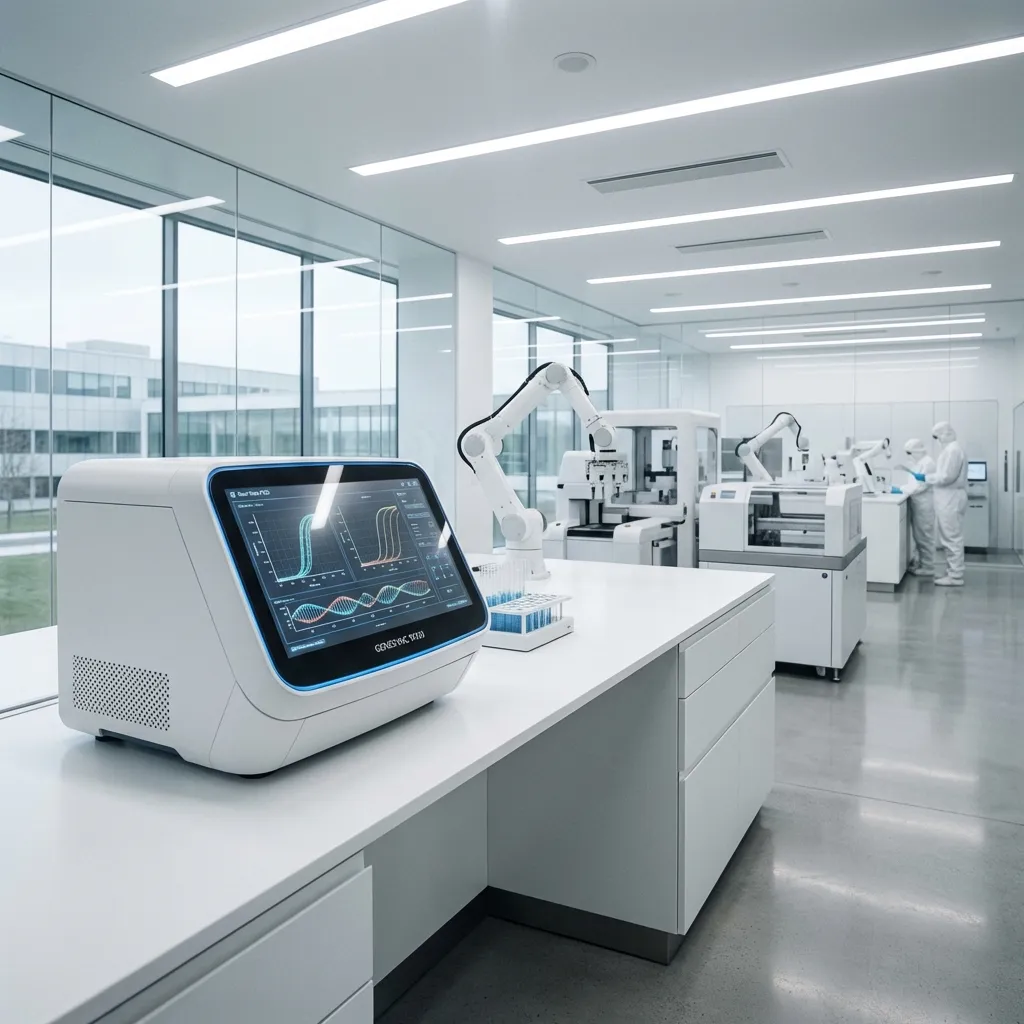
An STD test is a laboratory analysis of a sample taken from your body, looking for evidence of a sexually transmitted infection. There are two broad approaches. The first looks for your immune response — the antibodies your body produces after an infection takes hold. The second looks for the organism itself, by amplifying its genetic material until there is enough to detect; that is what PCR (polymerase chain reaction) and NAAT (nucleic acid amplification testing) do.
Which approach is used depends on the infection. Blood-borne infections such as HIV, syphilis and hepatitis B and C are usually screened from a blood sample. Bacterial infections of the urinary and genital tract — chlamydia, gonorrhea, ureaplasma — are usually detected by PCR on a urine sample or a swab, because the organism is physically present there.
2. STD vs STI — What's the Difference?
The two terms describe the same thing at different stages:
- STI — sexually transmitted infection. The organism is present. You may have no symptoms at all.
- STD — sexually transmitted disease. The infection has begun to cause disease or symptoms.
Medicine increasingly prefers "STI", because it reflects the reality that a large share of people carry an infection without ever feeling ill — and because "infection" carries less stigma than "disease". In everyday search and conversation, "STD" is still the more common term, which is why both appear on this site.
3. What Gets Tested, and From Which Sample
A panel is simply a defined list of targets. The infections most commonly included are:
- HIV — a virus that attacks the immune system. Detected early, it is manageable. Screened from blood.
- Syphilis — a bacterial infection often called "the great imitator" because its early sore is typically painless and easy to miss, so if untreated it can progress to a harder-to-treat stage before it's noticed. Screened from blood.
- Hepatitis B and C — viruses transmitted through blood and sexual contact, with long-term consequences for the liver. Screened from blood.
- Chlamydia and gonorrhea — two common bacterial STIs covered by our PCR panels. Detected by PCR from urine or a swab.
- Herpes and HPV — common viral infections; some HPV strains are linked to cancer. Detected by PCR from a swab.
- Ureaplasma — a bacterium that causes burning and discharge but is left out of many standard Bangkok panels, so it goes undetected unless you specifically test for it.
If you want the detail on that last one, the Ureaplasma testing guide covers why it is so often missed.
4. PCR vs Rapid Tests: Why the Method Matters
A rapid test looks for antibodies — your body's reaction to an infection. That reaction takes time to build, so if you test too soon after exposure there may be nothing yet for the test to find. Rapid tests can miss up to 20% of early infections for exactly this reason.
PCR does not wait for your immune system. It copies any genetic material from the organism over and over until there is enough to detect, which means it can identify an infection days rather than weeks after exposure, and with fewer false negatives. The trade-off is that PCR needs a laboratory and a thermocycler, where a rapid test needs neither. For a fuller comparison, see PCR vs rapid STI tests.
5. When to Test: Window Periods
The most common mistake is testing too early. The window period is the gap between exposure and the point at which a test can detect anything. Test inside that window and a negative result means very little.
- 4th-generation HIV antibody/antigen test — window about 28 days. It looks for the antibodies your body creates, and your body needs roughly a month to produce enough of them.
- HIV RNA PCR / NAAT — window about 7 to 10 days. It looks for the virus's genetic material directly, so it does not wait for an immune response. This is the option for early detection.
Beyond a specific exposure, the usual reasons to test are: unprotected sex, a new partner, symptoms that will not settle, or a partner who has tested positive. If you have multiple partners or are taking PrEP, testing every 3 to 6 months is the common recommendation. If you test early and the result is negative, repeat it once the window for that infection has closed.
6. Getting Tested in Bangkok
Bangkok offers public hospitals, private hospitals and dedicated sexual health clinics. The Thai Red Cross Anonymous Clinic asks for no ID and is heavily subsidised — often under 500 THB for basic screening — but runs on government hours with a public waiting room. Private providers are faster and more private in practice, but Thai law requires them to register patients, which makes them confidential rather than anonymous. The anonymous vs private guide compares both in detail.
How CheckThatMate approaches it: testing is designed to work without registration or ID — a "Ghost ID" keeps your booking and your result unlinked from your identity, and results are delivered privately to you, under the Thailand Personal Data Protection Act (PDPA). Samples are analysed by licensed Bangkok partner laboratories on Roche Cobas, Abbott RealTime and Hologic Panther platforms, and collection happens at three hubs — Sukhumvit (BTS Asok), Silom (BTS Sala Daeng) and Thonglor (BTS Thong Lo) — or at your own address through concierge sample collection for ฿700.
The panels themselves: Basic 4 (฿1,599, blood only — HIV, syphilis, hepatitis B and C, results in 24 hours), Complete 16 PCR (฿3,149, 16 targets, results in about 4 hours) and Ultimate 20 (฿4,499, the widest panel, adding HPV, results in about 4 hours).

7. Common Questions
What is STD testing?
STD testing is screening a blood, urine or swab sample for sexually transmitted infections — most commonly HIV, syphilis, chlamydia, gonorrhea, hepatitis B, hepatitis C, herpes and HPV. Because most of these infections cause no symptoms early on, testing is the only way to know your status.
What is the difference between an STD and an STI?
STI means sexually transmitted infection — the infection is present, with or without symptoms. STD means sexually transmitted disease — the infection has started to cause disease or symptoms. Medicine increasingly prefers STI, because many people carry an infection without ever developing symptoms.
What does an STD test check for?
It depends on the panel. Blood samples are used for HIV, syphilis, hepatitis B and hepatitis C. Urine or swab samples are used with PCR to detect chlamydia, gonorrhea, ureaplasma and other organisms directly. A wider panel adds HPV screening.
How long after exposure should I get tested?
Each infection has its own window period — the gap between exposure and the point a test can detect anything. A 4th-generation HIV antibody/antigen test needs about 28 days; an RNA PCR/NAAT test can detect HIV roughly 7 to 10 days after exposure. Testing before the window closes can produce a false negative, so an early negative should be repeated.
How accurate are rapid STD tests compared with PCR?
Rapid tests look for the antibodies your body produces in response to an infection, which takes time to build, so they can miss up to 20% of early infections. PCR looks for the genetic material of the organism itself, so it detects an infection earlier and more reliably.
Can I get an STD test in Bangkok without showing ID?
Yes. CheckThatMate is designed for testing without registration or ID: a Ghost ID keeps your booking and your result unlinked from your identity, and results are delivered privately to you under the Thailand Personal Data Protection Act (PDPA).