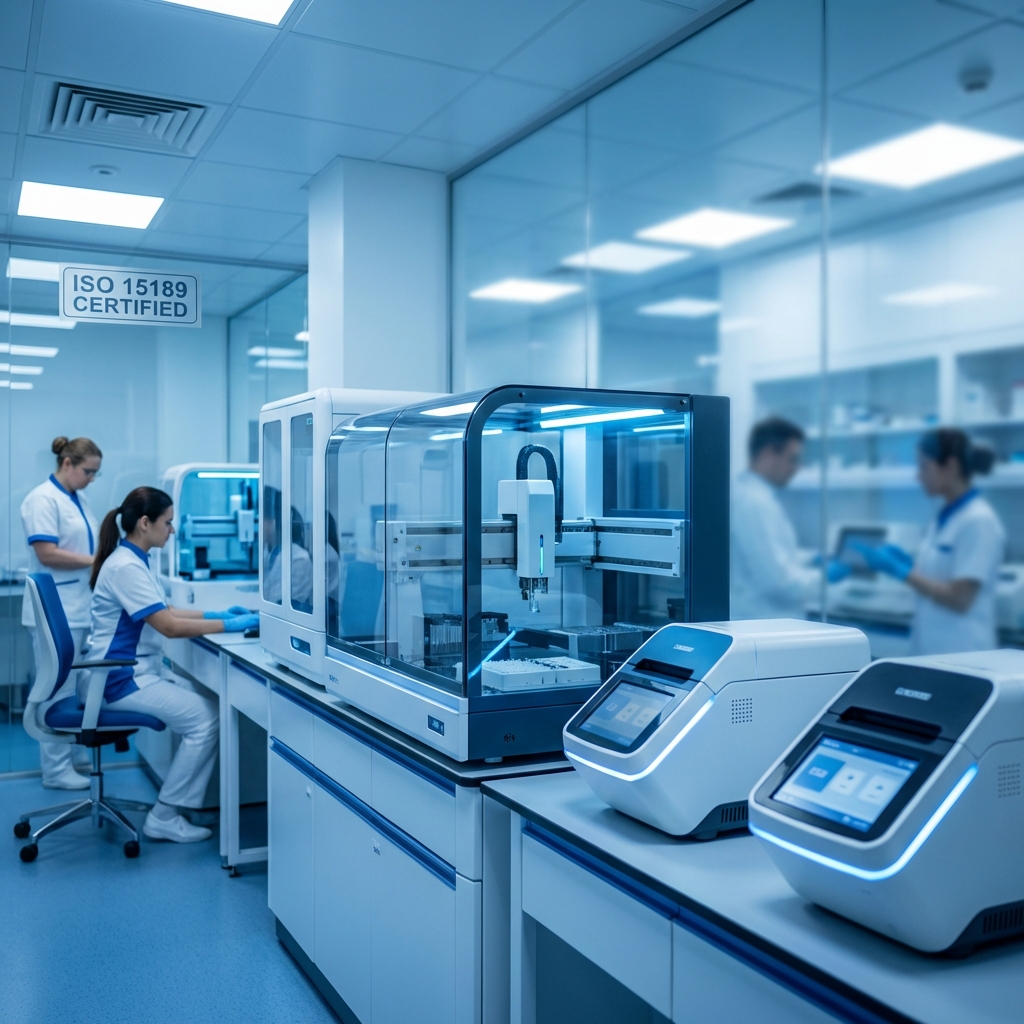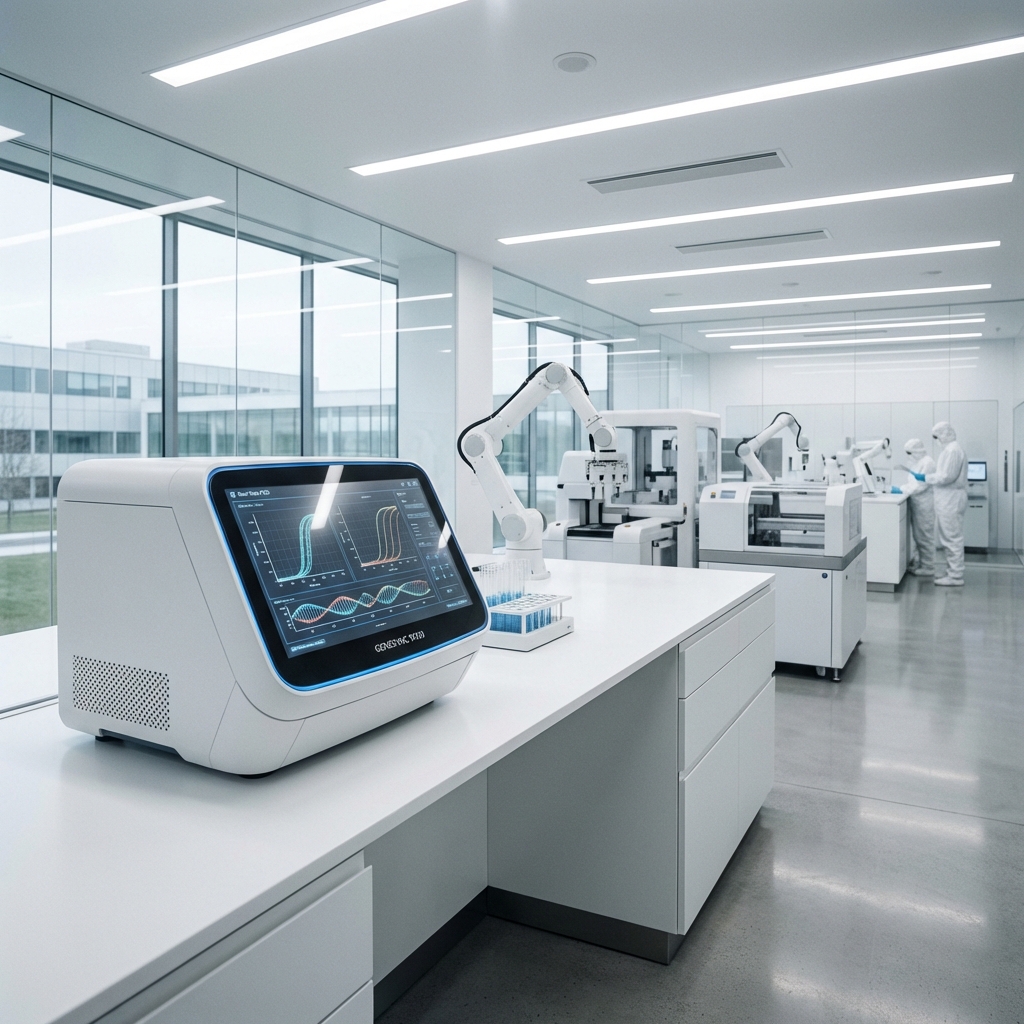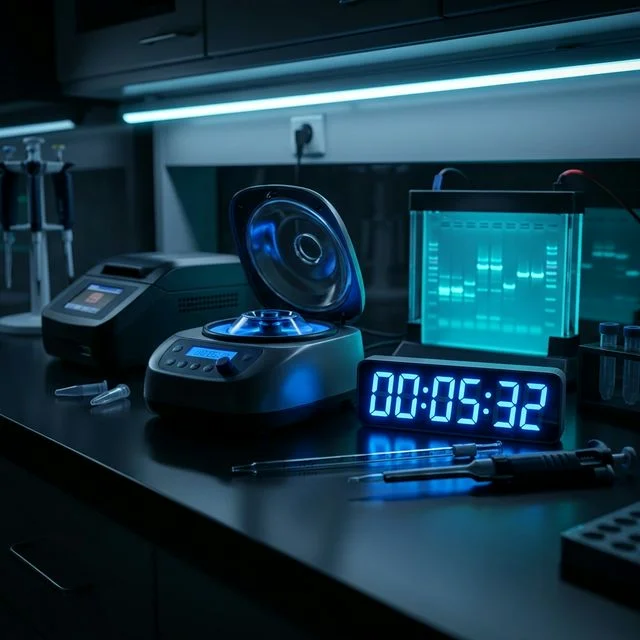
Every hour of delay after a potential exposure is an hour of anxiety — and an hour in which a treatable infection can deepen. We engineered a solution to the time problem.
Speed via Logistics
- No Batching: We run samples as they arrive, not when a machine fills up.
- Direct Courier: Samples go straight to the lab, bypassing clinic holding fridges.
Why Hospitals Take 24-48 Hours
The technology to run a PCR test doesn't take 24 hours. The actual chemical reaction takes less than 2 hours. So why do hospitals make you wait days?
The answer is "Batching."
Hospitals and large clinics use massive analyzers that process 96 samples at a time. To save money, they wait until they have 96 patients before running the machine. If you are patient #1, you wait for 95 other people to show up.
The 4-Hour Timeline
The traditional medical model is slow by design. You travel to a clinic, you wait in a lobby, you provide a sample, and then the sample waits. It waits for a batch. It waits for a courier. It waits for the lab tech's shift to start. This latency is where anxiety breeds — and where infections go undetected.
That wait has real clinical stakes, not just inconvenience. Large hospitals like Bumrungrad can take 2–5 days for a full STI panel — and for time-sensitive decisions, day 3 is already too late.
Clinical Insight
The 72-Hour Window: For post-exposure interventions like DoxyPEP, every hour within the 72-hour window matters. A test result that arrives on day 3 is medically useless for this critical decision. A result in 4 hours is actionable.
At CheckThatMate, we use Continuous Flow Processing. We don't wait for batches. Here is exactly what happens when you book with us:
Collection & Dispatch
Sample collected. Dedicated courier moves directly to lab. No stops.
Lab Intake & Prep
Sample arrives. Barcode scanned. Technician begins RNA extraction immediately.
Extraction Complete
Genetic material is isolated. Loaded into the Thermocycler.
Amplification (PCR)
40 cycles of heating and cooling amplify DNA. Results appear in real-time.
Data Review & Send
Technician verifies curves. Digital report generated and emailed securely.
The Rider Grid
That T+0:00 dispatch step depends on infrastructure most patients never see. Bangkok is a complex organism, and traffic patterns shift by the minute — our "Rider Grid" is not just a delivery service, it's an algorithmic dispatch system built to get a courier moving the moment you book.
When you book a test, our system identifies the nearest rider carrying a sterile cold-chain kit and routes them to your location. These are not food delivery drivers. They are trained medical couriers, vetted for privacy protocols and bio-hazard handling. They move anonymously through the city — indistinguishable from regular traffic, but carrying critical diagnostic payload.

Grid Coverage by Zone
Highest density in Sukhumvit, Silom, Sathorn, and Thonglor. Extended coverage available with advance booking.
Cold Chain Integrity
PCR samples are delicate. RNA degrades with heat. In a tropical city like Bangkok — where ambient temperatures routinely exceed 35°C — a sample left in an uncontrolled environment is a ruined test result.
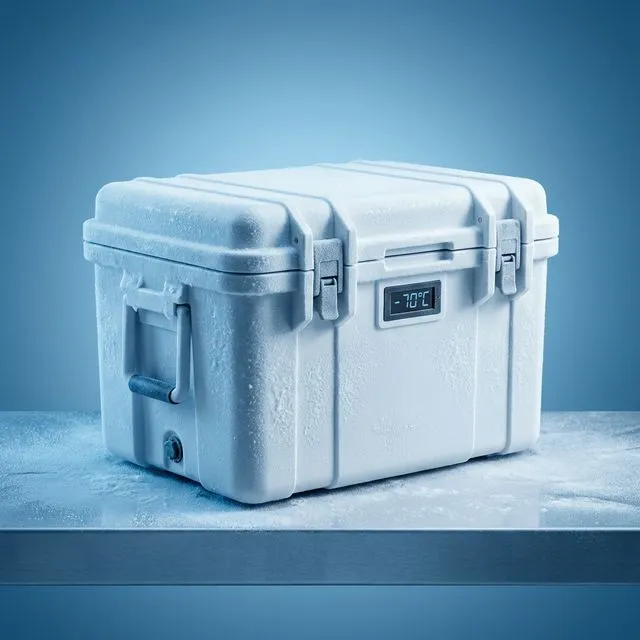
The Specimen Vault
- ✓ Active cooling maintains 2–8°C for up to 12 hours — the clinical gold standard for PCR preservation.
- ✓ Shock-absorbent foam core protects tubes against road vibration and sudden stops.
- ✓ Digital temperature logging on every collection — a timestamp audit trail for quality assurance.
- ✓ All containers meet ISO 6710 standards for diagnostic specimen transport.
The Tech Stack Behind the Speed
Behind each physical rider is a digital brain. Our dispatch engine calculates routes in real-time, factoring live traffic data from BMTA sensors, rider GPS positions, and lab capacity status — all in a single orchestration loop.
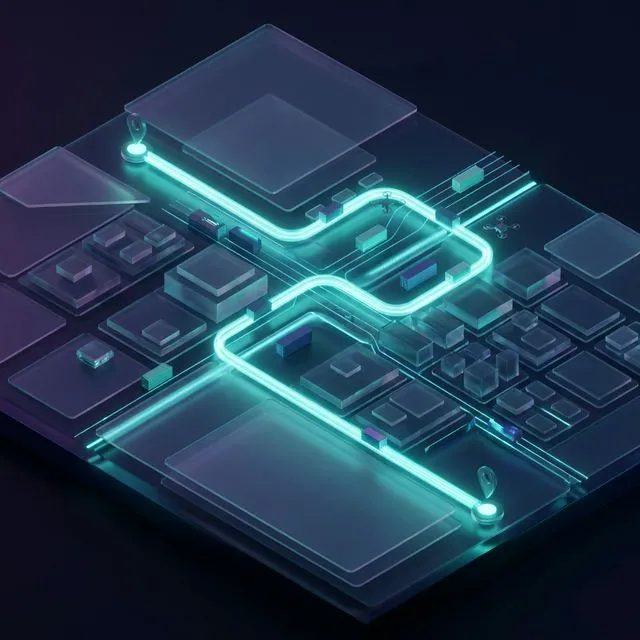
Once your sample reaches the partner lab, it is immediately prioritized. There is no batching, no waiting in a queue. Every Express sample triggers a "single-piece flow" — a manufacturing principle borrowed from Toyota's production system — meaning your sample is processed as a standalone priority job from the moment it arrives.
"The fastest result is a negative result, delivered before your anxiety has time to compound. We built every step of this system around that principle."
— CheckThatMate Operations Team
The Cost of Speed
Running small batches is more expensive. It requires more technician time and higher reagent costs per test. CheckThatMate absorbs these costs because we believe speed reduces anxiety. Knowing your status 20 hours earlier means 20 hours less stress.
CheckThatMate vs. The Alternatives
How does our end-to-end flow compare to the standard options in Bangkok?
| Provider | Time to Results | Friction | Privacy |
|---|---|---|---|
| Hospital (Bumrungrad) | 2–5 Days | ID, forms, long waits, upselling | Low — name in system |
| Pulse Clinic | Same-day (฿17,350) | Passport required, high price | Moderate |
| MedEx / Standard Clinic | 1–24 Hours | ID at lab, call-centre coordination | Moderate |
| CheckThatMate Express | 4 Hours | WhatsApp → Done. Zero forms. | Maximum — code only, no ID |
Need answers tonight?
Skip the 2-day hospital wait. A rider is at your door in under 38 minutes, and your results arrive via encrypted PDF in ~4 hours.
Book Express LoopReferences & Standards
- WHO. Laboratory Quality Standards and their Implementation. Geneva: WHO Press, 2011.
- ISO 6710:2017. Single-use containers for venous blood specimen collection.
- Workowski KA et al. STI Treatment Guidelines, 2021. MMWR Recomm Rep 2021;70(RR-4):1–187.
- Molina J-M et al. On-demand preexposure prophylaxis in men at high risk for HIV-1 infection. N Engl J Med. 2015;373:2237-2246.